
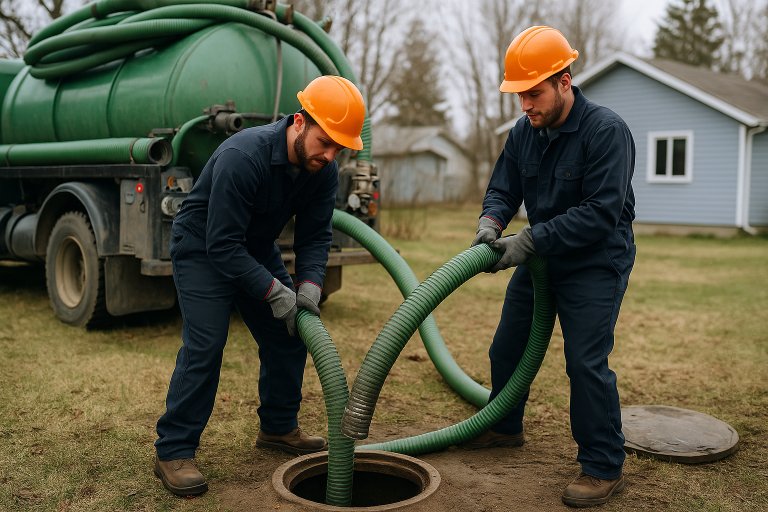
If your property isn’t on municipal sewer, your septic tank is doing the job the city’s sewer system does for everyone else — separating solid waste, effluent, and scum so wastewater can safely leave your property. Left too long between cleanings, solids build up until the tank can’t keep up, which leads to slow drains, odours, and in the worst cases, backflow into your home or a failed drain field.
Regular septic tank cleaning keeps that from happening, and keeps your system compliant with local septic regulations — worth confirming the specific requirements for your municipality, since they can vary between jurisdictions around Winnipeg.
What’s Included
A septic tank cleaning visit covers:
- Tank pumping — removing accumulated solid waste and scum so the tank is back to its full working capacity.
- Inspection — checking the tank and connected plumbing for damage or wear that needs addressing before it becomes a bigger repair.
- Cleaning — clearing residue after pumping to keep bacterial build-up from restarting the clock early.
- Drain field assessment — checking for saturation or leaks in the field itself, since a clean tank draining into a failing field doesn’t solve the underlying problem.
Who Needs This, and How Often
Residential properties on septic — most commonly acreages and rural properties around Winnipeg without a municipal sewer connection — need routine pumping to avoid backups and protect the drain field from damage that’s expensive to repair.
Commercial and institutional properties — rural businesses, schools, and any facility running its own septic system — need the same maintenance to avoid service disruptions.
Portable toilet operators also need regular holding-tank pump-outs to keep units sanitary and in service, which we handle alongside standard septic tank cleaning.
As a general guideline, most tanks need pumping every 3–5 years, depending on tank size and household or facility usage — a larger household or higher-volume commercial site will need it more often. We can recommend an exact schedule after assessing your tank.
For plumbing and drain issues beyond the septic system itself, see our main cleaning services, or our full range of drain cleaning services for anything on the municipal-sewer side.
Service Area
We service septic systems for properties around Winnipeg that aren’t on municipal sewer — including rural municipalities and acreage communities (confirm your actual coverage area here — e.g., East St. Paul, West St. Paul, Headingley, Springfield). Because access to a stressed tank or field can be time-sensitive, especially heading into spring thaw when ground saturation is highest, being locally based means a faster response than a company dispatching from further out.
FAQ
How often should my septic tank be cleaned? Most tanks need pumping every 3–5 years, but the right interval depends on tank size and how much the system is used. We can set a schedule specific to your property after an inspection.
What are the signs my septic tank needs cleaning? Slow drainage, odours near the tank or drain field, standing water over the field, or a sewage backup are all signs it’s due. Don’t wait for an overflow to schedule service.
What happens if I delay septic tank cleaning? An overloaded tank can back up into the home, damage the drain field, or contaminate surrounding soil — all of which cost significantly more to fix than routine pumping does.
Are your septic tank cleaning services insured? Yes — our team carries insurance covering the work performed on your property.
If your septic system is due for service or you’re not sure when it was last pumped, get in touch and we’ll help you figure out where you stand.