
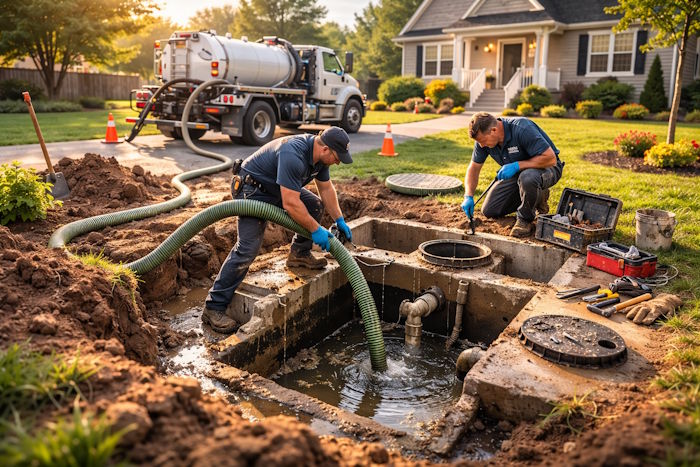
Understanding how failed septic systems are repaired starts with knowing what causes a failure in the first place. When a septic system stops working properly, it usually affects both the tank and the surrounding drain area. Whether it’s a minor issue or a major system failure, the right repair approach depends on what part of the septic system has broken down.
What Happens During a Septic System Failure?
A septic system failure typically means wastewater is no longer being treated and dispersed properly. The tank may be overfilled, the drain field may be saturated, or the soil may no longer absorb effluent the way it should. In some cases, multiple components of the system are affected.
When a failed septic system occurs, you might notice sewage backing up into the home, standing wastewater above the drainfield, or strong odors near the tank. These signs indicate that the septic system cannot process wastewater safely.
Step 1: System Inspections and Diagnosis
The first step in any septic repair is professional system inspections. A technician evaluates the tank, checks sludge levels, inspects baffles, and examines the drain field. Identifying whether the issue is a blockage, damaged pipe, or full tank determines whether the solution will be simple or more involved.
Many system malfunctions are caught early through inspections. Sometimes there are inexpensive repairs that can be made within an hour, such as replacing a broken baffle or clearing a clogged line. These small fixes can prevent a larger septic system failure.
Step 2: Tank Pumping and Minor Repairs
If the issue is simply a full septic tank, septic pumping may resolve the immediate problem. Excess solids in the tank can push waste into the drain area, causing temporary backup.
Minor repair work might include:
- Fixing broken tank components
- Replacing damaged pipes
- Adjusting distribution boxes
- Addressing minor soil blockages
These solutions restore proper wastewater treatment and extend the life of the system.
Step 3: Drain Field or Absorption Bed Repair
If the drain field (also called an absorption bed) is the problem, repairs become more complex. A clogged drainfield prevents proper dispersal of effluent, leading to surface wastewater and serious system failure.
In some cases, professionals can restore the soil’s ability to absorb wastewater by improving flow, addressing compaction, or redirecting lines. However, if the soil is completely saturated or contaminated, partial replacement of the drain field may be necessary.
Step 4: Tank Replacement or Full System Replacement
When the tank is cracked, collapsed, or structurally compromised, tank replacement may be required. Older concrete tanks can deteriorate over time, allowing groundwater to enter or wastewater to leak into surrounding soil.
If the entire septic system has experienced long-term neglect, repeated backups, or significant environmental impact, a full replacement may be the only reliable solution. While this is more costly, it restores proper wastewater treatment and protects the property long-term.
Preventing Future Septic System Failure
Most cases of failed septic setups trace back to skipped maintenance, excessive water use, or improper disposal habits. Regular inspections, scheduled pumping, and responsible usage dramatically reduce the risk of septic system failure.
A proactive homeowner can avoid major breakdowns by:
- Scheduling regular inspections
- Keeping up with pumping
- Avoiding harsh chemicals and grease
- Protecting the drain field from heavy vehicles
Consistent care keeps both the tank and overall system operating efficiently.
FAQ
What happens when a septic system fails?
When a septic system fails, wastewater may back up into the home, surface in the yard, or contaminate surrounding soil. This indicates the system can no longer properly treat and disperse waste.
What is the average lifespan of a septic system?
With proper maintenance, many septic systems last 25–40 years. Neglect can significantly shorten that lifespan.
What is the most common cause of septic system failure?
The most common cause is lack of regular pumping and inspections, which allows solids to clog the drain field and overwhelm the system.
How to fix a failed septic drain field?
Repairing a failed drain field may involve clearing blockages, improving soil conditions, or partial replacement if damage is severe.
If you’re dealing with a failed septic system or suspect early system malfunctions, don’t wait for the problem to escalate. Rocket Rooter provides professional septic inspections, septic repair, and full system solutions to restore safe wastewater treatment and protect your property.