
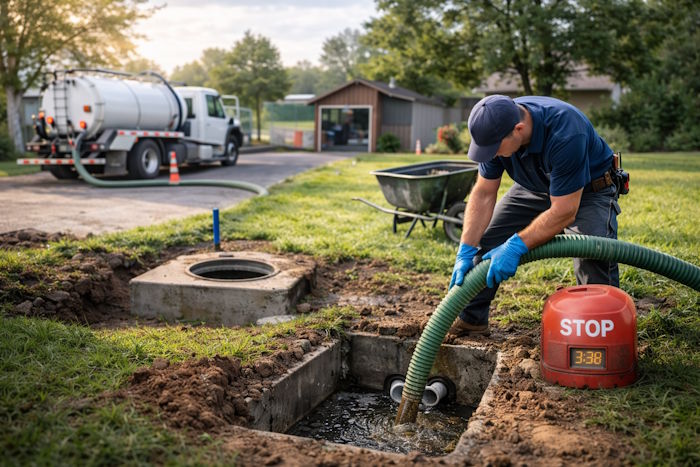
Catching early warning signs septic problems can save you thousands in repairs and protect your property from serious system failure. A healthy septic system quietly manages wastewater every day, but when something starts to go wrong, your home and yard will usually give you clues. Knowing what to watch for can help you act before a minor issue turns into a costly emergency.
Slow Drains and Backups Inside the House
One of the first warning signs homeowners notice is slow drains. If your sinks, tubs, or showers are draining slower than usual, your septic system could be struggling. When sinks are backing up or it feels like it’s constantly backing into fixtures, that’s a red flag.
If multiple drains in the house are affected at the same time, the problem may not be regular plumbing — it could point to your septic tank or the overall system. When wastewater has nowhere to go, it can push sewage back into your home, creating both property damage and serious health risks.
Standing Water or Pooling Water in the Yard
Another common sign of a failing septic setup is standing water or pooling water in the yard, especially above the drain field. If you notice soggy spots where the soil should be dry, your septic field may no longer be absorbing wastewater properly.
A saturated field means the system isn’t filtering waste the way it should. Over time, untreated wastewater can surface, affecting both your property and the surrounding environment.
Sewage Odors Around the Tank or Drain Field
A properly working septic tank should not produce strong smells outside your home septic area. If you notice persistent sewage odors near the tank, around the drain field, or even inside the home, that’s often an early indicator of trouble.
When waste and wastewater aren’t flowing correctly through the septic system, gases can escape. This can signal a clogged tank, a damaged field, or a larger system failure developing underground.
Gurgling Sounds and Water Level Changes
Unusual sounds from your plumbing can also point to issues. Gurgling drains, fluctuating water levels in toilets, or slow refilling can all suggest the system is overloaded. These subtle signs often appear before visible backups.
If left alone, these issues may escalate into full system failure, requiring extensive repair work or even replacement of the septic tank.
When to Schedule a Tank Inspection
If you’re seeing one or more of these signs, don’t wait. A professional tank inspection can determine the condition of your septic tank, the sludge level, and whether the system inspected is functioning correctly.
Regular septic maintenance and timely pumping reduce the risk of major breakdowns. Many homeowners ignore the basics of septic basics until it becomes an emergency — but early action makes a big difference.
What a Failing Septic System Looks Like
A visibly failing septic setup may include:
- Persistent standing water over the drain field
- Frequent indoor backups
- Strong odors near the tank
- Lush, overly green patches in the yard
- Wastewater surfacing above the soil
These are serious warning signs that your septic system needs immediate attention.
FAQ
What are some possible warning signs of septic problems?
Common signs include slow drains, indoor backups, standing water in the yard, strong sewage odors, and soggy areas over the drain field.
What are the first signs your septic needs to be pumped?
Frequent backups, gurgling sounds, and wastewater moving slowly through the system often indicate your septic tank may be full and require service.
What is the most common cause of septic system failure?
Lack of proper septic maintenance, skipped pumping, and excess wastewater entering the system are the leading causes of system failure.
What does a failing septic system look like?
You may see pooling water, detect foul smells, or notice wastewater backing up into your home — all clear indicators that the septic setup needs attention.
If you’re noticing any of these early signs, don’t wait for a complete breakdown. Rocket Rooter provides professional septic services, inspections, and emergency plumbing support to keep your septic system working safely and efficiently